BOOKS

JOURNAL

GALLERY

ABOUT

CONTACT


View Cart

QUOTES NEW!

Browse these quotes and familiarize yourself with our publications . . .


Showing posts with label family. Show all posts

December 8, 2021

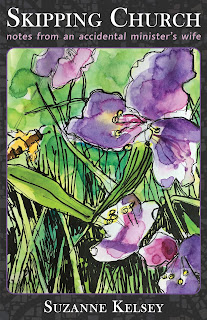
from Skipping Church, by Suzanne Kelsey

The Buddha taught that attachment to anyone or anything or any place is futile because nothing ever stays the same. Change is the only constant. All is impermanent. 

For many years I witnessed this law of impermanence during my daily walks with Ginger in the woods near the Coralville Reservoir, then the postage stamp prairie on the edge of Ames, and the prairie in Scott County Park, north of DeWitt. Bloodroot pushes out of the ground in April like old, gnarled palms that turn youthful and flat as they rise, then old and leathery as spring progresses. Sweet Williams release their aromatic lilac scent for a few days in May, and then the smells turn musky and fade. Purple coneflowers bloom in June like they are forever, then pass the baton to their yellow cousins. In the fall a deer carcass gets picked over by hungry, cawing ravens; a hawk flies over with a screaming mouse in its talons. Canadian geese honk southward and then north again, leaving the old and sick behind.

All of this without a single complaint on anyone’s part.

Before her last days in DeWitt, even dear Ginger silently accepted her own impermanence as her eyes turned milky and her joints turned stiff. Toward the end, she chased squirrels only in her dreams, with yips and twitching paws.

If you let go a little, you’ll have a little peace, the Buddhists say. If you let go a lot you’ll have a lot of peace. If you let go completely, you’ll have complete peace. Mahusukha, the Great Happiness, the great release. Nature knows it and Ginger knew it.

—Suzanne Kelsey, Skipping Church: Notes from an Accidental Minister's Wife


July 1, 2021

from Walking Hadrian’s Wall, by Bob Royalty


Religion, many have argued, . . . [is] the “sacred canopy” placed over our social world to provide meaning and prevent chaos. We build religions to build connections with each other, to make our societies function, to connect our lives to the vast universe. 

Hadrian’s Wall is fake in that sense, a reconstruction of the Roman wall that is a tourist destination rather than a border; there is England on both sides of the wall wherever it crops up. I was participating in a ritual of sorts, a faux ritual, perhaps, walking the wall from Wallsend to Bowness-on-Solway. . . Ritual is part of the many social constructions of religion, just as Clayton’s Wall is part of the many constructions of Hadrian’s Wall, since all of it has been rebuilt at one point, either by emperors after Hadrian or by archaeologists. None of these different functions, for the wall or for religion, are bad. They just are. As a scholar of religion, I try to peel back the layers of meaning to see the different ways religion is formed and how it functions over time and within a society. In many ways I work as an archaeologist works on the wall, looking for layers, dating objects and repairs, describing the function in different times and places, trying to decide what was and what might have been, peeling back the appearances and the practices for the origins. Since I work on living religions, in particular Christianity, this often bothers people. Religion as a rule has not wanted this story told or its origins revealed. . . Religion wants the past as a beautiful image, not a messy reality.

—Bob Royalty, Walking Hadrian’s Wall


April 13, 2021

from About Franz: Remembering C. G. Jung—A Son's Story, by Mary Dian Molton

As I turned toward the stairs, I was met with a great surprise. I was faced by an enormous, stunning, blue-and-white star. It was painted on an inside corner wall, close to the stairway. I stood stricken, almost dumbfounded, by the star’s majesty and incredible power. I had neither read nor heard of this wall painting! Franz later said he thought it had never been photographed as the light is poor, and the distance from wall to camera would not be enough to get a good picture and do it justice. This was the only moment when I was completely alone during this trip to Bollingen, and it was also the moment in which I felt closest to the singular spirit of Carl Jung. Such glory in such a small and private corner. I remained there for a time, imagined Carl Jung standing just there, painting an image of such incredible symmetry and mystery in this silent, narrow space and thought of how he must have needed, for himself, to paint this glorious star on this particular wall. It seemed to me an act of highly personal spiritual intensity. Even now, I think of it as my own special surprise, maybe a symbol for me of the hidden power of Bollingen. I have never forgotten it. A truly wondrous star, so close. In succeeding years, when I’d again hear Carl Jung’s response to the question of whether he believed in God—“I don’t need to believe; I know”—I think of this star.


—Mary Dian Molton, About Franz: Remembering C. G. Jung—A Son's Story

March 11, 2020

from Can Love and Manners Get Us Through? by Angela Wright

Levi Clancy, Holding My Grandmother’s Hand When
She Was 87 and I Was 26, 2017. WC CC
I didn’t become the good southern girl my grandmother wanted me to be. Instead, I became an activist for social justice and a pastor—roles she found unbecoming, especially for a woman, and more especially for one of her granddaughters. I marched, lobbied, and advocated for all kinds of things she didn’t agree with: labor rights, voting rights, immigrant rights, civil rights. As smart and independent as she was, she didn’t even agree with the notion of women’s rights. When I asked her to help me pay for seminary, she said, “No one wants to hear a woman preacher. They want a man’s voice because it sounds like God.” All this she said while writing me a check.

After seminary, I strayed even further from my roots. I started an alternative church in downtown Birmingham where Black, Brown, and White people worshipped, worked, and gathered at the table together. And I fell in love with a Black man.

Regardless of our disagreements, every time I turned into my grandmother’s driveway, I found her standing with the screen door wide open, a huge smile on her face as she called out, “Hey, Sugah!,” and walked toward me to gather me up in her arms.


December 11, 2019

from The Dancing Clock, by Nancy Gerber


And so, who am I?

If I discard the roles that have defined me—daughter, wife, mother, friend—and try to name who I am apart from those roles, I would say this: I am a seeker, a collector, and a grazer.


I am a seeker of questions rather than answers, of meaning and meaningful experiences, of what it is that makes human beings tick, the beating heart that keeps us going day after day in the face of troubles, illnesses, uncertainties, disappointments, personal and professional challenges. Yes, it’s a desire to cling to life, to navigate the rushing waters that threaten to capsize us, but it’s also more complicated than that. What drives people to make the choices they make? How do human beings cope with suffering and trauma?


I am a collector of words and all things related to words: novels, stories, poems, journals, diaries. Reading and writing are the modes I use to approach the questions about meaning, motivation, and survival that trouble and animate me.


I am a grazer. I like quiet and solitude so that I can contemplate my questions, so that I have ample time to read and write. I’ve lived through sixteen years of parental illness—first my father’s, then my mother’s—years that were difficult and sad and isolating and emotionally draining. I like to be still, to gaze inward and travel in the realms of imagination and desire, to gather my energy to meet the ever-present demands of living.


—Nancy Gerber, The Dancing Clock