BOOKS

JOURNAL

GALLERY

ABOUT

CONTACT


View Cart

QUOTES NEW!

Browse these quotes and familiarize yourself with our publications . . .


Showing posts with label book. Show all posts

December 8, 2021

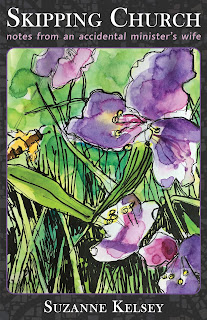
from Skipping Church, by Suzanne Kelsey

The Buddha taught that attachment to anyone or anything or any place is futile because nothing ever stays the same. Change is the only constant. All is impermanent. 

For many years I witnessed this law of impermanence during my daily walks with Ginger in the woods near the Coralville Reservoir, then the postage stamp prairie on the edge of Ames, and the prairie in Scott County Park, north of DeWitt. Bloodroot pushes out of the ground in April like old, gnarled palms that turn youthful and flat as they rise, then old and leathery as spring progresses. Sweet Williams release their aromatic lilac scent for a few days in May, and then the smells turn musky and fade. Purple coneflowers bloom in June like they are forever, then pass the baton to their yellow cousins. In the fall a deer carcass gets picked over by hungry, cawing ravens; a hawk flies over with a screaming mouse in its talons. Canadian geese honk southward and then north again, leaving the old and sick behind.

All of this without a single complaint on anyone’s part.

Before her last days in DeWitt, even dear Ginger silently accepted her own impermanence as her eyes turned milky and her joints turned stiff. Toward the end, she chased squirrels only in her dreams, with yips and twitching paws.

If you let go a little, you’ll have a little peace, the Buddhists say. If you let go a lot you’ll have a lot of peace. If you let go completely, you’ll have complete peace. Mahusukha, the Great Happiness, the great release. Nature knows it and Ginger knew it.

—Suzanne Kelsey, Skipping Church: Notes from an Accidental Minister's Wife


July 1, 2021

from Walking Hadrian’s Wall, by Bob Royalty


Religion, many have argued, . . . [is] the “sacred canopy” placed over our social world to provide meaning and prevent chaos. We build religions to build connections with each other, to make our societies function, to connect our lives to the vast universe. 

Hadrian’s Wall is fake in that sense, a reconstruction of the Roman wall that is a tourist destination rather than a border; there is England on both sides of the wall wherever it crops up. I was participating in a ritual of sorts, a faux ritual, perhaps, walking the wall from Wallsend to Bowness-on-Solway. . . Ritual is part of the many social constructions of religion, just as Clayton’s Wall is part of the many constructions of Hadrian’s Wall, since all of it has been rebuilt at one point, either by emperors after Hadrian or by archaeologists. None of these different functions, for the wall or for religion, are bad. They just are. As a scholar of religion, I try to peel back the layers of meaning to see the different ways religion is formed and how it functions over time and within a society. In many ways I work as an archaeologist works on the wall, looking for layers, dating objects and repairs, describing the function in different times and places, trying to decide what was and what might have been, peeling back the appearances and the practices for the origins. Since I work on living religions, in particular Christianity, this often bothers people. Religion as a rule has not wanted this story told or its origins revealed. . . Religion wants the past as a beautiful image, not a messy reality.

—Bob Royalty, Walking Hadrian’s Wall


May 20, 2021

from Old Stones Understand, by Stacey Murphy


   Leaves Let Go

It is not the way of leaves

to care about how they fall.


It doesn’t matter

whether there are heavy, thunder-filled

clouds overhead

or miles of bright blue and sunshine.


A leaf doesn’t

cry out in pain if a harsh wind

tugs it from its twig

nor does it giggle with mischief if it

manages to break free on its own.


A leaf doesn’t

fret over which is better

to swoop down in a wild, swirling canopy,

a rustling riot of yellow magic with hundreds of others,

or to flutter demurely to the ground

in a quiet, private moment.


No leaf even considers holding on,

resisting its destiny,

its part in the inevitable pattern.


For the leaf, simply letting go

is the thing.


—Stacey Murphy, Old Stones Understand


May 4, 2021

from About Franz: Remembering C. G. Jung—A Son's Story, by Mary Dian Molton


In retrospect, Franz carried in his presence a commitment to a very singular, very specific mode of hospitality that respects the history and tradition of the family and indeed something of the spiritual essence of his father and his place in the world order. But in no way was Franz Jung a mere tour guide of his father’s intimate surroundings. He was, instead, a man who managed to be cordially apart from the world of psychological inquiry while still maintaining a healthy respect for his father’s work and a lively interest in the people who associate themselves with the Jungian world. Something of his own poise in this effort seemed to have been a rather remarkable achievement of selfhood. He was both engrossed in his father’s story and somehow also quite free of it, a man involved, yet quite comfortably apart. 

April 13, 2021

from About Franz: Remembering C. G. Jung—A Son's Story, by Mary Dian Molton

As I turned toward the stairs, I was met with a great surprise. I was faced by an enormous, stunning, blue-and-white star. It was painted on an inside corner wall, close to the stairway. I stood stricken, almost dumbfounded, by the star’s majesty and incredible power. I had neither read nor heard of this wall painting! Franz later said he thought it had never been photographed as the light is poor, and the distance from wall to camera would not be enough to get a good picture and do it justice. This was the only moment when I was completely alone during this trip to Bollingen, and it was also the moment in which I felt closest to the singular spirit of Carl Jung. Such glory in such a small and private corner. I remained there for a time, imagined Carl Jung standing just there, painting an image of such incredible symmetry and mystery in this silent, narrow space and thought of how he must have needed, for himself, to paint this glorious star on this particular wall. It seemed to me an act of highly personal spiritual intensity. Even now, I think of it as my own special surprise, maybe a symbol for me of the hidden power of Bollingen. I have never forgotten it. A truly wondrous star, so close. In succeeding years, when I’d again hear Carl Jung’s response to the question of whether he believed in God—“I don’t need to believe; I know”—I think of this star.


—Mary Dian Molton, About Franz: Remembering C. G. Jung—A Son's Story

March 4, 2021

from “The Power of Belief,” Fires of Heaven, by James B. Nicola


You know beliefs are “myths more true than fact,”
but some believe that what they believe’s exactly
true, and even murder is no sin
but their responsibility when in 
the presence of the devil, which is you,
no matter that you know it isn't true.

In any time zone, any latitude
where people have endured, the attitude 
endures. The ecumenical is not
welcomed, nor an elucidating thought
allowed. In my experience the danger
is most acute wherever you're the stranger.

—James B. Nicola, from “The Power of Belief,” Fires of Heaven

February 16, 2021

February 2, 2021

from The Clue of the Red Thread, by Julie Tallard Johnson


The richness of our life comes from making meaning with what arises day to day, moving forward with increased clarity of who we are and what truly nurtures us. 

—Julie Tallard Johnson, The Clue of the Red Thread: Discovering Fearlessness and Compassion in Uncertain Times

January 5, 2021

from The Rhythm of It, by Anita Sullivan


Poets have always walked the world with their ears extended like antennae, sifting the air for poetic snippets. They know the basic rhythms by heart, but need a constant supply of new images and ideas to pour into these rhythm patterns. . . . The only catch is that poems have a mind of their own. Each time we try to marry a rhythm pattern to a set of words that seems to fit, the pattern is either smitten or not by the supplicants. If not, we can’t look to meter or rhyme to bail us out; we have to put on our boots and go back out onto the land, like a bridegroom becoming worthy of his ideal bride.

—Anita Sullivan, The Rhythm of It

December 29, 2020

from The Grammar of Untold Stories, by Lois Ruskai Melina


Some fifteen years later, not long after we’d moved onto our land, I turned the dirt on the south-facing side of our house into a vegetable garden with raised beds I built myself. I filled them with carefully measured proportions of topsoil, sand, compost, blood meal, and bone meal, concocting a balanced environment of calcium, phosphorous, nitrogen, and potassium. I turned the mixture over and over, placing the spade into the dirt and stepping on the ledge of it, until the loam and the bone and stench were one.

When the soil was ready, I planted: basil and oregano and sage in peat pots that I started inside under ultraviolet light; sugar snap peas and red leaf lettuce early from seed; zucchini and spaghetti squash a little later; red peppers, Japanese eggplant, and finally, Roma tomato seedlings when I was certain there was no chance of frost.

For a few years, we had fresh salads, well-seasoned chicken and fish, and an August of zesty stews made with peppers, tomatoes, and eggplant. But the growing season in our microclimate was too unpredictable, too short. There were too many rows of green tomatoes hanging in the garage each fall. The rich soil and the cool climate, I decided, were better suited to roses like those my mother planted wherever we lived.

Despite my own passion to reproduce the gardens of my youth, I discouraged my husband from propagating our farm with the hardwoods that reminded him of his origins—oak, maple, and hickory—trees that grow slowly, live forever, and drop richly colored leaves in the fall. I’m fond of them, too, but I didn’t want to be like the early settlers of the West who brought cuttings of their favorite Eastern plants with them, trying to make the strange open spaces of the West look familiar. I didn’t want a farmhouse that pretended it was in Ohio. When my husband showed me a small hickory tree, I placed my hands on my hips before passing judgment. “Put it behind the barn where I can’t see it,” I told him, as though it was a rusted old bicycle. He ignored me.

One day I looked out the kitchen window, across the lawn and partway into the pasture, and saw him watering the tree. We squabbled over its location for a few days until he finally looked me in the eye, and with his chin set, said, “I want to be buried on this farm, beneath a tree like the ones we had in our yard when I was growing up.” He looked away before continuing. “And I want it to be in a place where you’ll see me when you look out the window.”

My husband was in good health, but as we moved into the second half of our lives, I understood not only his thinking about his own mortality, but the desire to have a sense of continuity--to bring his past to his present and imagine it his future. When we got married, my husband left the house he had lived in since he was one year old. He’d helped plant the hickory and maple in the front yard and measured his own growth with theirs. My family moved frequently. I learned to adapt to new environments. I did not become attached to a particular house, but to the gardens my parents created wherever we settled. When my husband planted hardwood trees and I planted tomatoes and roses, we were reproducing not just vegetation, but our histories. We were thinking of heritage and legacy, of unbroken chains, in broader ways than people do when they have biological children, because we had to.

—Lois Ruskai Melina, The Grammar of Untold Stories

December 17, 2020

from The Grammar of Untold Stories, by Lois Ruskai Melina


When I fell in love with my husband I fell in love with his grandmother and with their love as thick and rich as the tomato sauce she served at every family gathering. As a boy, my husband spent Saturdays with her, and together they tore advertising circulars and old magazines into bits, tossed the colorful paper fragments into the air like confetti, and then vacuumed them up. I sucked his stories into my narrative, using his family like caulk to fill in the empty spaces where the wind whistled through mine. When his grandmother, as short and round as my own, pulled me into her softness, I didn’t want to leave.

—Lois Ruskai Melina, The Grammar of Untold Stories

December 9, 2020

from Wind on the Heath: New and Selected Poems, by Naomi Beth Wakan

Reflections While Lovemaking

I lie and watch the snowflakes
descending on the skylight as
he explores my body. I give
an occasional sigh or moan
lest he think I am not completely
with him, but most of me
is pondering on the perfect symmetry
of each flake as it falls, and
as he enters me, I switch to wonder
at the chaos of the flakes
as they become a thin sheet
of mush on the glass. I seek
for patterns in their randomness.
As we rise together in our own
peculiar symmetry, I consider
the thermodynamics that allows
the flakes to pile up more at the top end
of the skylight, and while
he groans with contentment, I
muse on the ethics of multi-tasking.

—Naomi Beth Wakan, Wind on the Heath

December 7, 2020

from Wind on the Heath: New and Selected Poems, by Naomi Beth Wakan


Ambition

To reach an age when things
fall away unneeded,
as spent petals on a flower,
as Fall leaves from the tree,
as skins of summer snakes.
When Socrates passed the market stalls
he noted, “What a lot
of things I don’t need.”
Ah! that’s what I mean.

September 18, 2020

from Singing the Land: A Rural Chronology, by Chila Woychik

Outside our artificial constructs—house, vehicle, shops, and schools—the real cosmos teems. We pass it or ignore it day after day, and then life ends without us ever having shimmered in the moonlight or cajoled along a rocky ridge bereft of civilization, without our letting the cry of the coyote raise goosebumps on our evening-chilled flesh.

We cart in pinecones to decorate our fall tables, embellish our cabinets with turban squash or yellow gourds. Organize perfect rows of viburnum or bottlebrush buckeye in a landscape stripped and homogenized to look like every other landscape for city blocks. Then we wonder why our eyes weary and our spirits sigh at the sameness. Why “getting away” often entails a trip to an uncultivated, disorganized setting; for rather than chaotic, nature is merely free, as we so often wish to be. Structure helps us achieve; random helps us breathe.


—Chila Woychik, Singing the Land: A Rural Chronology

July 1, 2020

from Singing the Land: A Rural Chronology, by Chila Woychik


The cold October air settles around my neck and I don’t really care that I left my scarf inside. The chickens still need fed and the sheep bleat. They need me, I tell myself; I am valuable. Then I finally realize I may never have anything earth-shattering and brilliant and Pulitzer-worthy and puddingish and great big like that one oak tree with the split trunk and diameter that would take three people to get their arms around, to leave a legacy about, then, when, it all and suddenly turns okay. There is peace. A softness falls. Sometimes it’s the simplest things.

—Chila Woychik, Singing the Land: A Rural Chronology

June 30, 2020

from Lead Me, Guide Me, by Kathy Ewing


“Everything is very simple. I can see this so well now,” he said. “We make life complicated. We start wars. We create conflict. We worry. But all everyone really wants are family, sharing a meal, playing some games, having fun. Even Donald Trump. That’s all he really wants. But we make everything complicated. All we really want is to be with family and friends and find joy in one another.”

That was what he wanted to tell me. I inferred that he wanted me to share it, so I wrote it down, and here it is. I’m sharing it now. He repeated some version of these thoughts several times during my visit.

I asked him what he’d learned. How was this realization different from what he had known before? “When I look back,” he said, “I see times when I thought I understood things better than I did. I saw them in a complicated way and was sure I had them all figured out. I couldn’t see through to the simple need, the simple humanity. I couldn’t see the simplicity.”

“All people want,” he repeated, “is someone to love them, someone to talk to them, someone just to provide a little bit of care.”

—Kathy Ewing, Lead Me, Guide Me

June 26, 2020

from Lead Me, Guide Me, by Kathy Ewing


Before you dismiss his attitudes as simplistic and Pollyanna-like, you need to understand how Father Dan spent his time, amidst more darkness and pain than most of us ever encounter. He sat by countless bedsides of people dying and performed hundreds of funerals, averaging three or four a week in recent years. In his large family, he witnessed debilitating illnesses and terrible accidents. Seven years ago, the diocese of Cleveland ripped away his church, his community, and his home of thirty years. He counseled victims of incest, rape, and other abuse. He had a special ministry to people with addiction. He endured his own profound losses of parents, siblings, and friends. He himself suffered various ailments, even before the cancer that took his life. He knew and loved way too many people who died of gunshot wounds, suicide, and overdoses. He saw and confronted injustice everywhere.

No wonder that sometimes the good cheer gave way to dark humor and startling bluntness. I’ve heard more than one sermon in which he said, “You know those people Jesus healed? They’re all dead now.” He meant that Jesus didn’t come to take away our problems. In fact, if you choose faith, you often choose a harder way. A few months ago, I heard him preach, “Our stories never end happily. It’s always a sad ending.” Of course, he had profound faith in an ultimate happy ending, but he was talking about the end of our lives on earth. “Life always has a tragic ending,” he said, and I thought then he was preparing us for what came on Saturday.

The astonishing thing about Father Dan is not his sunny optimism. It’s that it was so hard won. It’s true he was blessed with a sanguine temperament, but in order to deal with exhausting pain in his life and ministry, he dived deep and prayed. He spent hours alone in nature, alone with Scripture, alone with music. He deliberately worked his way through grief and sadness. When I asked him once why he was so happy, he said, “It’s a decision, it’s conscious, and it’s a habit.” He didn’t avoid the dark tunnel. He chose it. He entered it willingly and suffered his way to the bright light at the end.

—Kathy Ewing, Lead Me, Guide Me: The Life and Example of Father Dan Begin

June 24, 2020

from Singing the Land, by Chila Woychik


Makes sense Iowa feels home to me. Crop plats so large you drive a mile and the spread keeps going. They say South Dakota’s are even bigger, some five or seven miles square.

Grandpa’s piddly seven acres behind the old Illinois homestead with a kitchen pump handle and no other plumbing grew corn. The John Deere tractor’s flywheel took all that three-hundred-pound man could give it before the characteristic pop pop popping began. But he didn’t work those rows for nothing; his payout was mealtime when he ate and ate and ate. Half a dozen eggs, half a pound of bacon for breakfast. Sausage gravy and biscuits some days. Roast and potatoes, supper. Fried chicken. Corn on the cob. And homemade pies tasty as anything you ever had. The crank on the ice cream maker hardened along with the ice cream when the rock-salted ice started melting in earnest.

This was our growing-up, the land and seasons, the old-timey meals and the Hicksville blood running agrestic, green, and good. But our strange breed also had a German mother, as European as they get, strange indeed when you realize we settled smack in the middle of a provincial Midwest. Mother, lover of all things wurst: knockwurst, liverwurst, bierwurst. Maker of spaetzle and dumplings, red cabbage and rouladen. A small cold beer with each dinner meal.

The palate learned diversity that way, tongue split along the lines of Bavarian and backwoods. I took a twenty-year hiatus from that lineage to experience urbanity, discovered fine restaurants hold charm, hefty prices, and unique savor-jumpers, but even so, those memories of youth hover hard, and I’ve never junked the urge for home-cooked meals.

In my own kitchen, I fumble, knowledge, a lost vision in the presence of such worthy childhood ghosts. The acumen, I have, but lacking is desire, except the desire to be a child again alongside Mutti’s counter, watching her make Bavarian Zwetschgenkuchen, fresh plum cake, attuning my ears to her lovely throaty phrases, hearing an old German polka record spinning on the turntable. Or in Illinois Grandma’s cold winter / hot summer home where I felt secure, ran free, and feral, where her third-grade education and stories of working in the humid Arkansas cottonfields at age eleven gave rise to imagination and family strength and a can-do spirit of endurance still bound tightly to our pith in the face of each new adversity.

—Chila Woychik, Singing the Land: A Rural Chronology

March 12, 2020

from On the Arts, by Naomi Beth Wakan

Having ploughed through a thousand pages of adultery, I have now definitively selected de Maupassant as my role model for future short-story writing efforts, and I have three hundred of his stories to learn from. By the way, Guy de Maupassant penned his own epitaph: “I have coveted everything and taken pleasure in nothing.” I won’t follow him in this respect, and I hope mine can read: “I have taken pleasure in everything and coveted nothing.”

—Naomi Beth Wakan, On the Arts